
Updated 18 September 2026. Figures are indicative and exclude VAT.
 Illustrative image
Quick answer
Dilapidations are the repairs and reinstatement a tenant must carry out, or pay for, at the end of a commercial lease to return the premises to the condition the lease requires. The landlord's surveyor sets them out in a schedule of dilapidations.
What is usually included
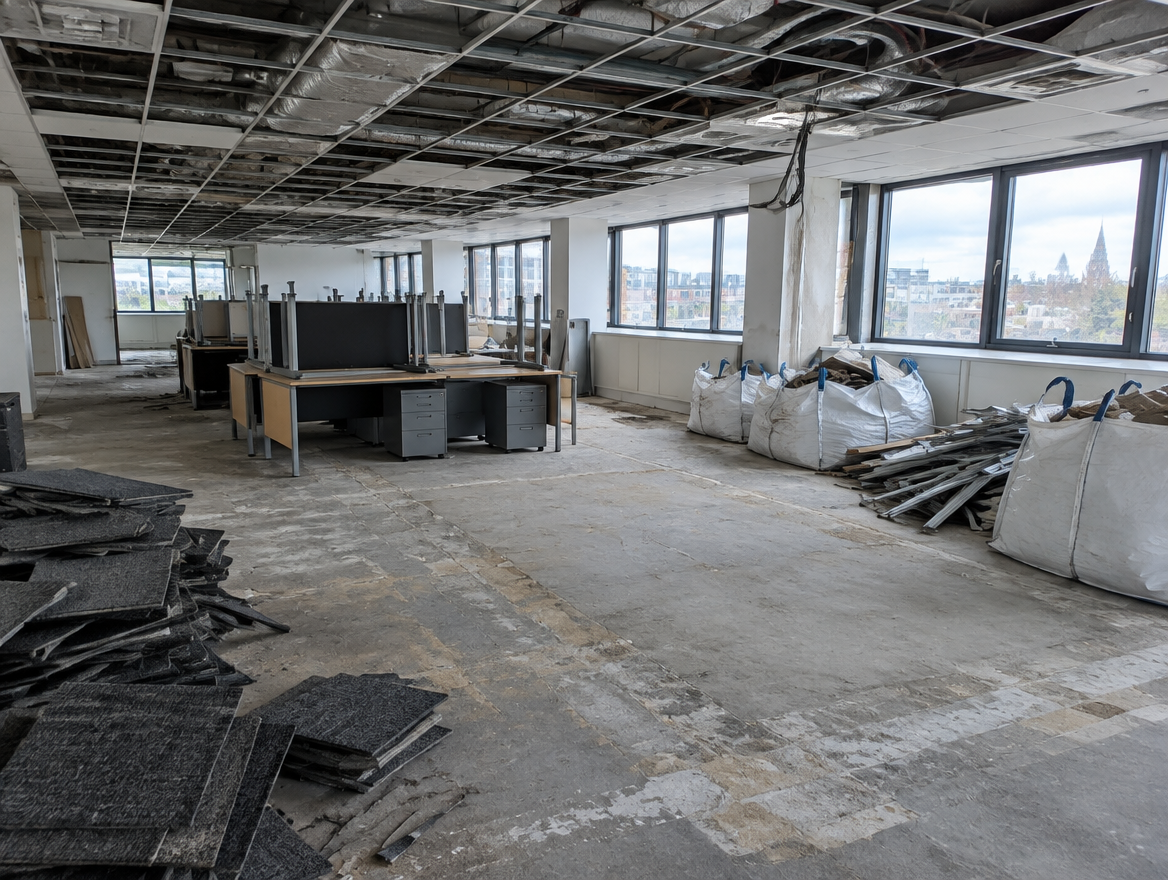
Removing tenant partitions and alterations, repairing or replacing damaged ceilings and floors, redecorating, and making services safe. The exact list depends on the lease wording and any schedule of condition agreed at the start.
Do the works or settle?
Tenants can carry out the works before lease end or agree a cash settlement with the landlord. An accurate contractor price for the schedule is useful either way, because it anchors the negotiation in real costs.
When to start
Review your lease 12 months before it ends and get the schedule priced 6 months out. That leaves time to negotiate and, if you do the works, to programme them before you hand back the keys.
More guides
- How much does an office fit-out cost in the UK?
- Category A vs Category B fit-out: what is the difference?
- How long does an office fit-out take?
- How soundproof are glass office partitions?
- Office fit-out checklist: 12 steps from brief to move-in
- How to choose an office fit-out contractor
- Designing an office fit-out for hybrid working
- Do office fit-outs need Building Regulations approval?
- Office refurbishment vs relocation: which is better?